Comprehensive Guide to Air Insulated Switchgear (AIS): Principles, Components, and Applications
A complete guide to air insulated switchgear (AIS) — what it is, its key components, the working principle, how it compares with gas insulated switchgear (GIS), where AIS substations are used, the advantages and limitations, and maintenance and safety essentials.
Air insulated switchgear (AIS) is the original and still the most widely installed form of medium- and high-voltage switchgear. It uses ordinary atmospheric air as the main insulating medium between live conductors — a simple, proven and economical approach that underpins most utility and industrial substations worldwide. This guide explains what AIS is, its key components, how it works, how it compares with gas insulated switchgear (GIS), where it is used, its strengths and limitations, and the maintenance and safety practices that keep it reliable.
What Is Air Insulated Switchgear?
Air insulated switchgear is a switchgear assembly in which atmospheric air provides the primary insulation between phases and between live parts and earth. The conductors are spaced apart at distances (clearances) large enough that air alone withstands the system voltage. Solid insulators — porcelain or epoxy — support and separate the conductors, while air fills the gaps.
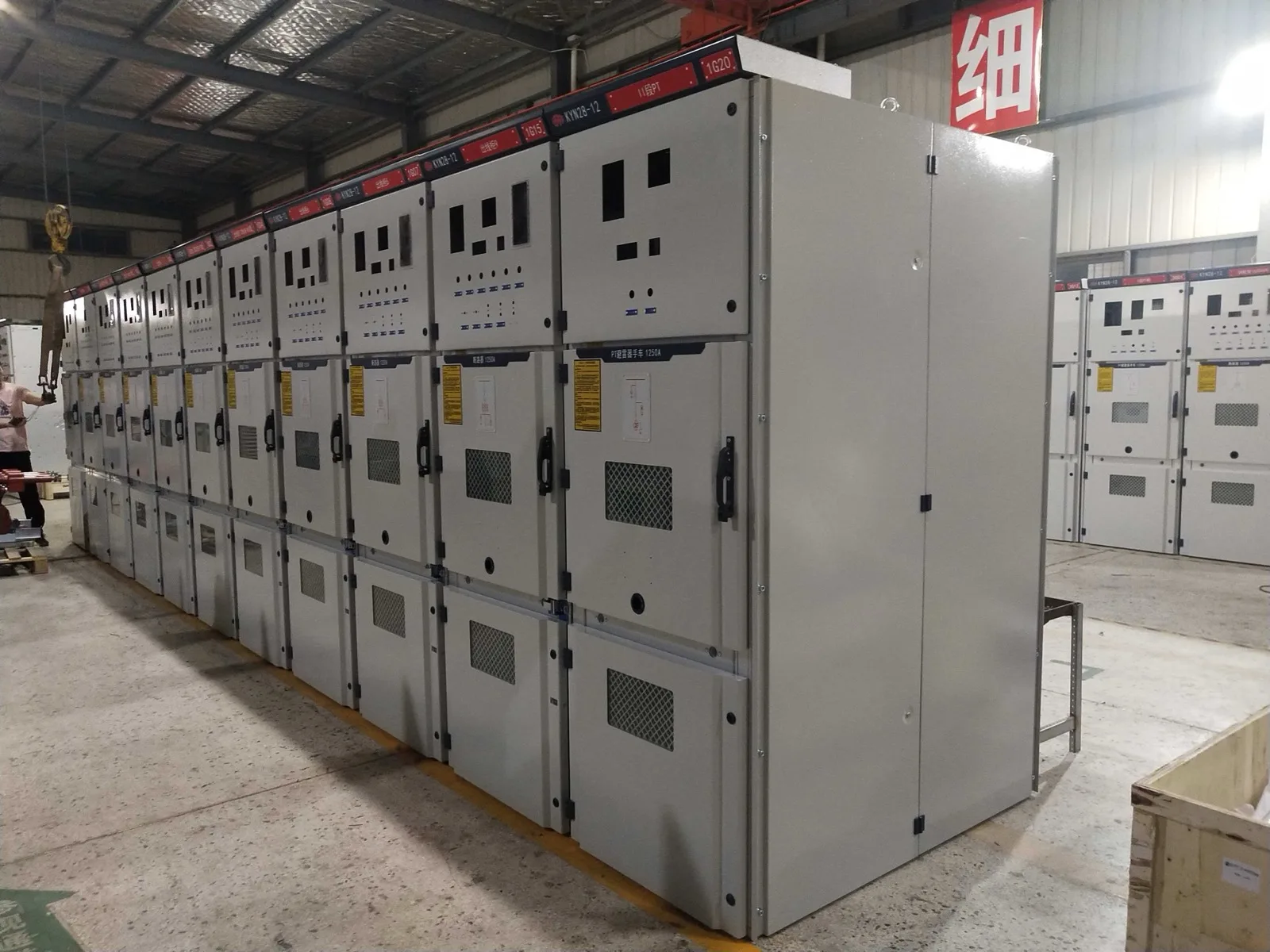
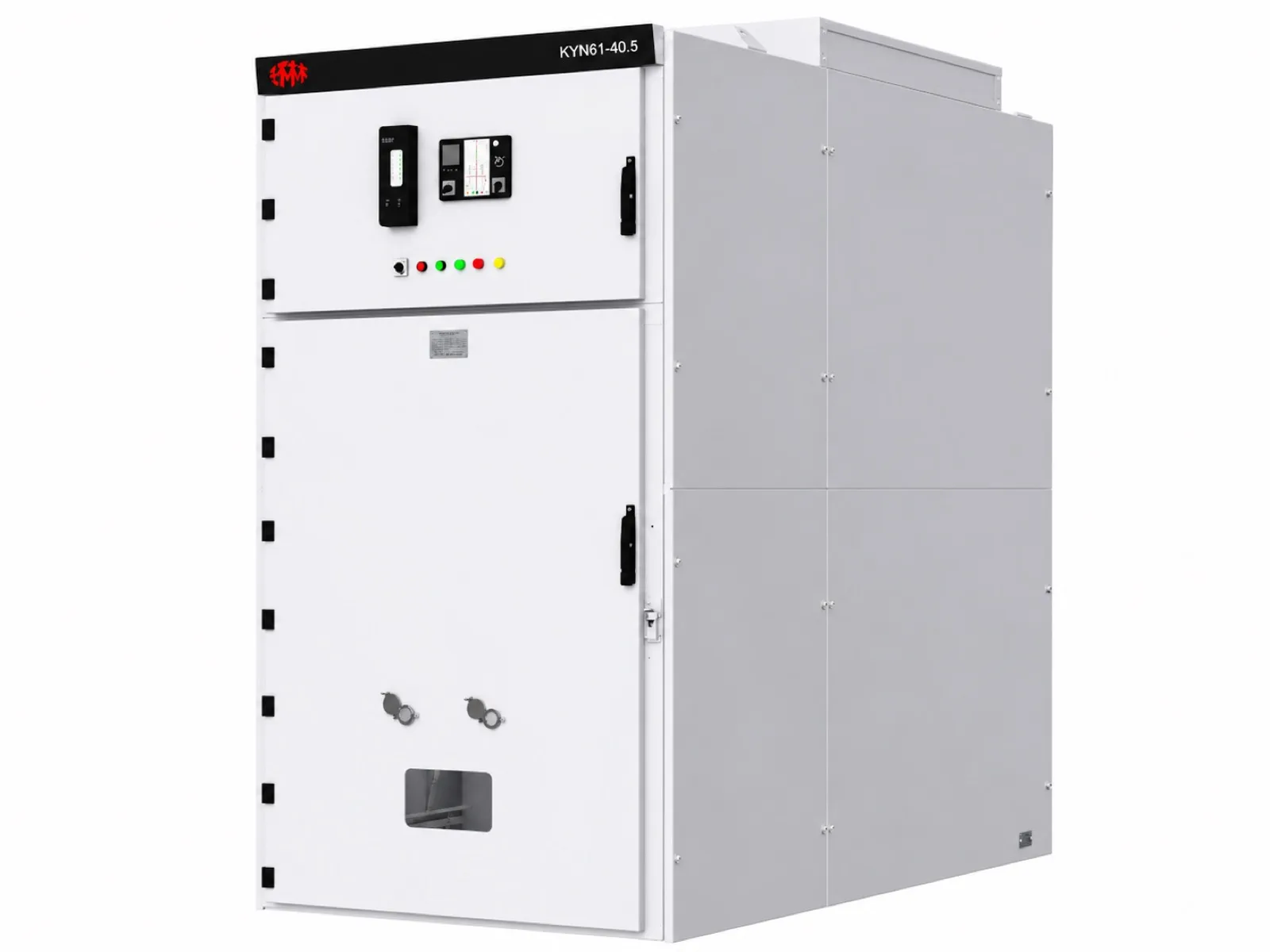
AIS covers everything from compact indoor metal-clad medium-voltage panels (such as the KYN series, where each circuit breaker sits in its own air-insulated compartment) to large outdoor high-voltage substations with open busbars on steel structures. Whatever the scale, the defining feature is the same: the insulating medium is air at atmospheric pressure, not pressurized gas.
Key Components of Air Insulated Switchgear
- Busbars — the main conductors that distribute power between the incoming and outgoing circuits, insulated by air and supported on insulators.
- Circuit breaker — the primary switching and fault-interrupting device (vacuum for MV, SF6 or vacuum for HV) that makes and breaks load and fault currents.
- Disconnector (isolator) — provides a visible, off-load isolating gap to make a circuit safe for maintenance.
- Earthing switch — connects an isolated circuit to earth so it can be worked on safely.
- Current and voltage transformers (CTs / VTs) — scale primary current and voltage down for metering and protection.
- Protection relays and control — detect faults and trip the breaker; modern systems use numerical (IED) relays.
- Insulators and bushings — porcelain or epoxy supports that hold conductors apart and pass them through barriers.
- Surge arresters — limit lightning and switching overvoltages.
- Enclosure / structure — metal cubicles for indoor metal-clad AIS, or steel gantries and supports for outdoor switchyards.
Working Principle of Air Insulated Switchgear
AIS performs three core functions — isolation, switching, and protection — all relying on air as the dielectric:
- Isolation: air clearances and solid insulators keep each phase apart and away from earth; disconnectors create a visible isolating gap for safe maintenance.
- Switching: the circuit breaker makes and breaks normal load current and, on a fault, interrupts the short-circuit current within milliseconds — the arc is extinguished inside a vacuum interrupter or SF6 chamber, not in open air.
- Protection: CTs/VTs feed protection relays that continuously monitor current and voltage; on detecting a fault, the relay trips the breaker to clear the fault and protect the network.
Because the main insulation is simply air, the required phase-to-phase and phase-to-earth clearances grow with system voltage — which is why higher-voltage AIS occupies more space than an equivalent GIS.
AIS vs Gas Insulated Switchgear (GIS): A Comparison
GIS replaces air with sulphur hexafluoride (SF6) gas, which has a much higher dielectric strength, sealed inside metal enclosures. That lets GIS shrink to a fraction of the size — at higher cost. The main trade-offs:
- Insulating medium
- AIS: atmospheric air · GIS: pressurized SF6 gas in sealed enclosures
- Footprint
- AIS: large (clearances grow with voltage) · GIS: up to ~70–90% smaller
- Initial cost
- AIS: lower capital cost · GIS: higher capital cost
- Installation environment
- AIS: sensitive to pollution, salt, dust and humidity · GIS: sealed, suited to harsh/coastal/indoor sites
- Maintenance
- AIS: parts accessible and easy to inspect/replace · GIS: minimal but specialized; needs SF6 handling
- Environmental
- AIS: no SF6 · GIS: contains SF6, a potent greenhouse gas requiring leak control
In short: AIS is favored where space is available and budget matters; GIS is favored where land is scarce or the environment is severe. Many networks use both — AIS at rural and roomy sites, GIS in cities, coastal areas and indoor substations.
Applications of Air Insulated Switchgear Substations
- Utility distribution and transmission substations (indoor metal-clad MV and outdoor HV switchyards)
- Industrial plants — steel, cement, mining, petrochemical and manufacturing intakes
- Renewable generation — solar and wind collector and step-up substations
- Commercial and infrastructure facilities — campuses, airports, ports and large buildings
- Rural and greenfield sites where land is plentiful and lowest capital cost is the priority
Advantages and Disadvantages of AIS
Advantages:
- Lower initial cost than GIS.
- Simple, well-understood technology with a huge installed base and skills base.
- Easy visual inspection and access to components for maintenance and replacement.
- No SF6 in the air-insulated parts — simpler environmental compliance.
- Components are widely available and easily interchangeable.
Disadvantages:
- Large footprint — needs substantial space, especially at high voltage.
- Exposed (outdoor) AIS is affected by pollution, salt, dust, humidity and wildlife, which can cause flashovers.
- More frequent cleaning and inspection than sealed GIS.
- Performance can degrade in heavily polluted or coastal environments without extra creepage and washing.
Maintenance and Safety Considerations
- Always follow the isolate–test–earth sequence and respect the mechanical interlocks before any work — never bypass them.
- Keep insulators clean — pollution and salt deposits reduce creepage and can cause flashover; schedule washing in dirty/coastal sites.
- Inspect and test periodically — contact resistance of breakers and disconnectors, insulation resistance, and relay/protection function checks.
- Check connections and earthing — loose joints overheat; verify earth continuity across the assembly.
- Maintain clearances and barriers — confirm shutters, covers and arc-flash protection are intact, and observe arc-flash PPE requirements.
- Keep records and a maintenance schedule — trending test results catches degradation before failure.
Conclusion: The Role of AIS in Modern Power Distribution
Air insulated switchgear remains the backbone of power distribution — proven, economical, easy to maintain and free of SF6 in its insulating parts. Where land is available and cost matters, AIS is usually the right choice; where space is scarce or the environment is severe, GIS earns its premium. HARRL manufactures indoor metal-clad air insulated medium-voltage switchgear across the 12 / 24 / 40.5 kV classes (the KYN series) with full type-test documentation. Share your single-line diagram, voltage and fault levels and our engineers will help you specify a compliant configuration.
Frequently Asked Questions (FAQs)
What does AIS stand for? AIS stands for Air Insulated Switchgear — switchgear that uses atmospheric air as the primary insulating medium between live conductors.
What is the main difference between AIS and GIS? AIS uses air at atmospheric pressure as insulation and needs larger clearances, while GIS uses pressurized SF6 gas inside sealed enclosures, making it far more compact but more expensive.
Is AIS used indoors or outdoors? Both. Compact metal-clad AIS panels are installed indoors, while large open-busbar AIS switchyards are installed outdoors on steel structures.
Why is AIS still widely used? Because it has a lower initial cost, is simple and well understood, is easy to inspect and maintain, and contains no SF6 in its air-insulated parts.