How to Select a Power Transformer: A Technical Guide for 11kV, 33kV & Distribution Systems
How power transformers differ from distribution transformers, what 11kV, 33kV and 132kV ratings mean, how an 11kV transformer actually works, the main core types, and the factors that drive a correct, compliant transformer selection for substation and industrial use.
A power transformer is the device that links one voltage level of an electrical network to another — stepping voltage up for efficient transmission or down for safe distribution and use. Because it sits at the heart of every substation and most industrial intakes, choosing the right transformer affects efficiency, reliability, losses, and the total cost of ownership for decades. This guide explains how power and distribution transformers differ, what the common 11 kV, 33 kV and 132 kV ratings mean, how an 11 kV transformer works, the main construction types, and the factors that should drive your selection.
Distribution Transformer vs Power Transformer: What's the Difference?
The two terms are often used interchangeably, but they describe transformers optimized for different jobs. Strictly, a "power transformer" handles higher voltages and ratings in transmission and primary substations, while a "distribution transformer" delivers the final step-down to consumer voltages. The practical differences:
- Voltage / rating
- Power transformer: typically ≥ 33 kV and large MVA (transmission & grid substations) · Distribution transformer: ≤ 33 kV, smaller kVA–MVA (local supply)
- Loading
- Power transformer: runs near full load, sized for peak efficiency at ~100% · Distribution transformer: variable load, sized for peak efficiency around 50–70%
- Efficiency point
- Power transformer: maximum efficiency at (or near) full load · Distribution transformer: optimized for all-day efficiency under fluctuating load
- Iron vs copper loss balance
- Distribution units minimize no-load (iron) loss because they're energized continuously even when lightly loaded
- Typical location
- Power: generation, transmission and primary substations · Distribution: secondary substations, industrial intakes, packaged substations
Voltage Levels Explained: 11 kV, 33 kV and 132 kV
Network voltages are standardized into bands. The familiar 11 kV, 33 kV and 132 kV figures map onto distinct roles in the chain from grid to load:
- 132 kV — sub-transmission / grid level. A 132/33 kV power transformer feeds a primary (grid) substation from the transmission network.
- 33 kV — primary distribution. A 33/11 kV transformer steps grid-substation voltage down to the 11 kV ring that feeds an area.
- 11 kV — secondary distribution. An 11/0.4 kV distribution transformer makes the final step-down to 400 V (three-phase) / 230 V for buildings, plants and street networks.
- 0.4 kV (400 V) — utilization voltage delivered to final low-voltage switchboards and loads.
So a "132/33 kV power transformer" lives in a grid substation, a "33/11 kV" unit in a primary substation, and an "11/0.4 kV" distribution transformer at the load center. Knowing where your transformer sits in this hierarchy fixes its primary and secondary voltages before any other decision.
How Does an 11 kV Transformer Work?
An 11 kV transformer works on electromagnetic induction, exactly like any other transformer — there is no moving part in the energy-conversion path. Alternating current in the primary winding sets up a continuously changing magnetic flux in a laminated steel core. That flux links the secondary winding and induces a voltage in it. The ratio of primary to secondary turns sets the voltage ratio:
- Turns ratio
- Vp / Vs = Np / Ns — the winding turns ratio sets the voltage ratio
- Example (11 kV → 400 V)
- Np / Ns ≈ 11000 / 400 ≈ 27.5 : 1 (line voltages, before vector-group correction)
- Power balance
- Ideally Vp·Ip = Vs·Is — stepping voltage down steps current up
- Frequency
- Operates at the supply frequency (50 or 60 Hz); the core flux alternates at that rate
A typical 11/0.4 kV unit uses a delta primary and a star (wye) secondary with a neutral point (vector group Dyn11), giving a neutral for single-phase loads and earth-fault protection. Tap changers on the high-voltage winding let the ratio be trimmed (commonly ±2 × 2.5%) to keep the output voltage steady as the network voltage varies.
Types of Power & Distribution Transformers
Transformers can be classified by core construction and by cooling/insulation method — the two choices that most affect size, losses and where the unit can be installed.
By core construction:
- Core-type — windings surround the core limbs; simpler construction, easier to repair, and the most common form for distribution and most power transformers.
- Shell-type — the core surrounds the windings, giving better mechanical bracing against short-circuit forces and used for some high-current / large units.
- Wound-core (e.g. amorphous-alloy) — toroidal/wound cores that cut no-load loss, used where all-day energy efficiency is the priority.
By insulation and cooling:
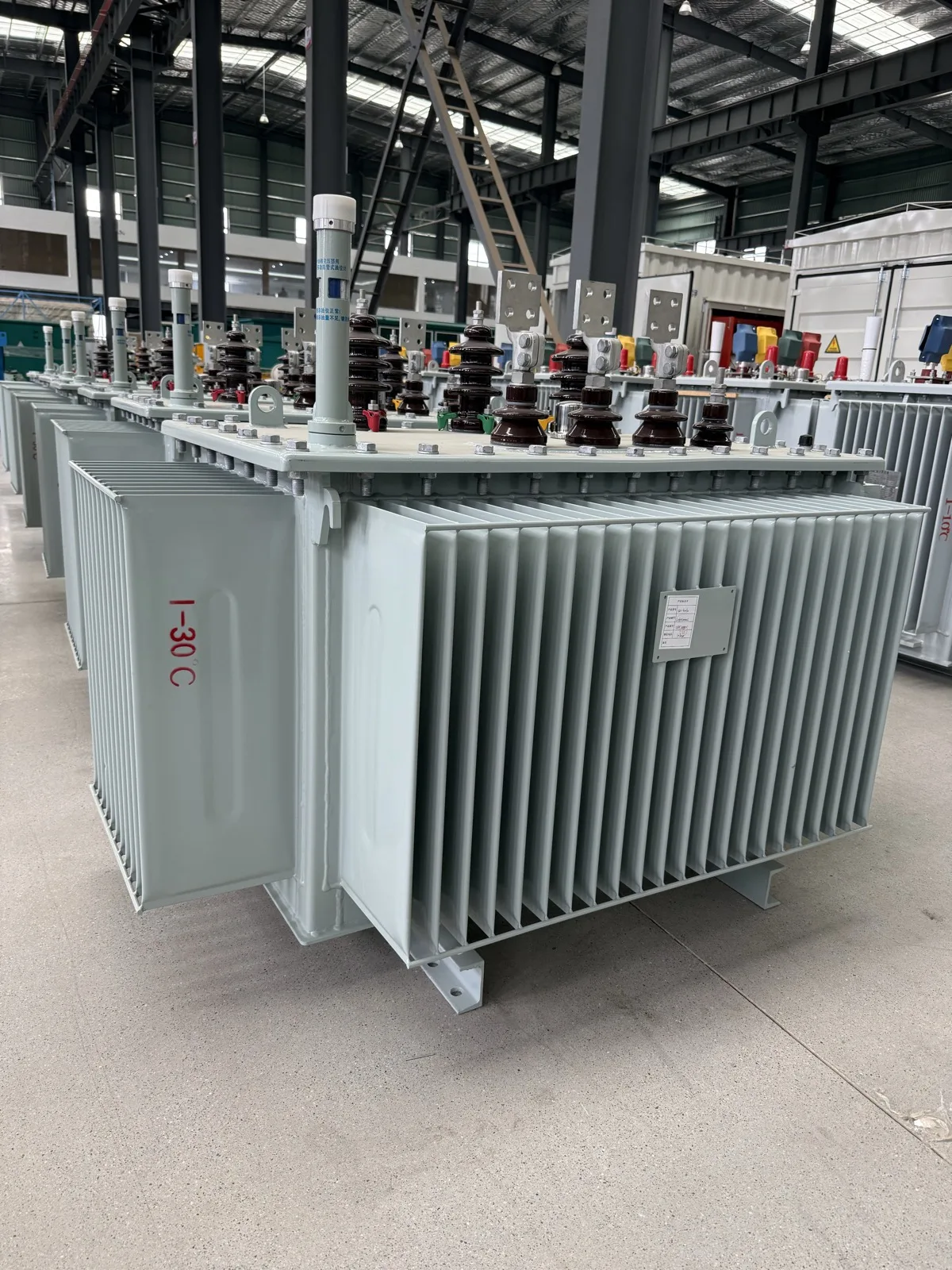
- Oil-immersed — core and windings sit in mineral (or ester) oil that both insulates and carries heat away; rugged and cost-effective, ideal for outdoor and substation duty (cooling classes ONAN / ONAF).
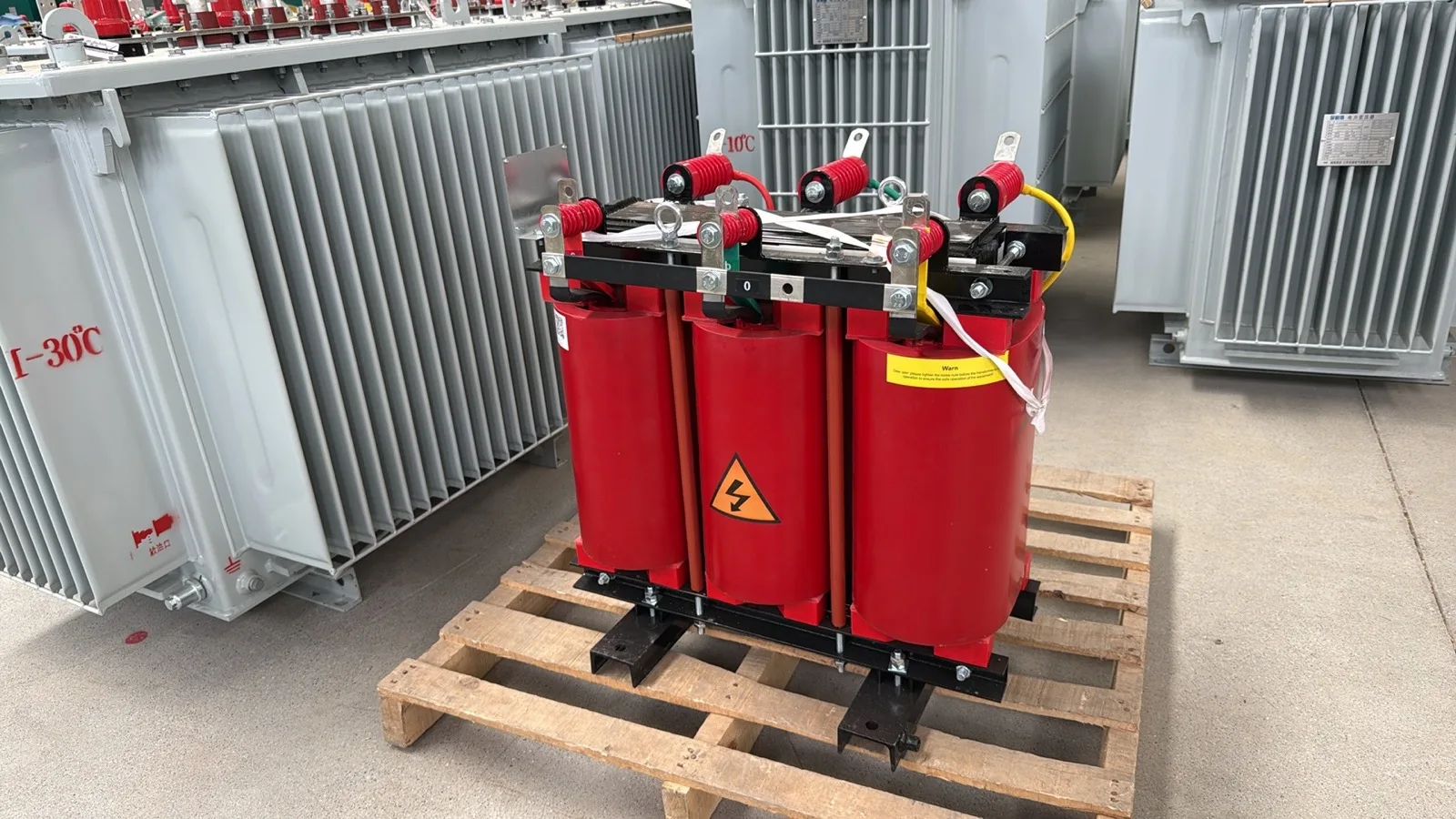
- Cast-resin dry-type — windings are vacuum-cast in epoxy resin with no oil; self-extinguishing, low fire-load and moisture-resistant, suited to indoor installation at the load center (hospitals, high-rise, data centers, metro).
Factors to Consider When Selecting a Power Transformer
- Rated power (kVA / MVA) — sized from the diversified load plus headroom for growth.
- Primary and secondary voltage — fixed by the network position (e.g. 33/11 kV, 11/0.4 kV) including the tap range.
- Vector group — e.g. Dyn11 — to match the network, provide a neutral, and parallel correctly with existing units.
- Impedance (% Z) — sets the short-circuit current and how units share load in parallel; typically 4–6% for distribution.
- Losses — no-load (iron) and load (copper) loss, weighed over the duty cycle; low-loss cores cut lifetime energy cost.
- Cooling / insulation — oil-immersed vs cast-resin dry-type, chosen for the installation environment and fire requirements.
- Insulation level (BIL) — rated lightning-impulse and power-frequency withstand voltages for the system.
- Temperature rise & insulation class — verified for the site ambient and altitude derating.
- Standards & efficiency rules — IEC 60076 series (and regional eco-design / minimum-efficiency regulations).
- Accessories & protection — tap changer type, Buchholz/pressure relief, temperature monitoring, and the enclosure or substation it integrates with.
Common Applications: 33 kV / 11 kV Substations and Industrial Use
- Utility primary and secondary substations (33/11 kV and 11/0.4 kV step-down)
- Industrial plant intakes — steel, cement, mining, petrochemical, and manufacturing
- Renewable generation — solar and wind step-up and collector substations
- Commercial and critical infrastructure — high-rise buildings, hospitals, data centers, metro and airports (dry-type at the load center)
- Packaged / prefabricated substations where the transformer is integrated with MV switchgear and an LV board
Conclusion: Best Practices for Transformer Procurement
A correct transformer selection starts with the network position (which fixes voltages and tap range), then the load (kVA/MVA and growth), then the duty and environment (cooling, insulation, losses), and finally compliance to the IEC 60076 series and any regional efficiency rules. Specify the vector group and impedance to match existing units, weigh no-load against load losses over the real duty cycle, and confirm the type-test evidence before purchase. HARRL manufactures distribution-class transformers across both platforms — SCB cast-resin dry-type (10 / 20 / 35 kV) for indoor load-center installation and oil-immersed S22 / S20 / S13 units for substation and outdoor duty — and can supply them integrated into prefabricated substations. Send us your voltages, load schedule and site conditions and our engineers will help you specify the right unit.