Distribution Transformer Basics: A Technical Guide for Beginners and Professionals
Distribution transformer basics explained — how they work, their key components, how to read the nameplate, typical 11 kV / 433 V specifications, the common types, and how to choose a manufacturer and maintain the unit.
A distribution transformer is the final step-down transformer in a power network — it takes medium voltage (commonly 11 kV) and reduces it to the utilization voltage (typically 400/433 V three-phase) that supplies buildings, factories and street networks. It is the most numerous transformer in any grid. This guide covers how it works, its components, how to read the nameplate, typical 11 kV / 433 V specifications, the common types and how to choose a manufacturer and maintain the unit.
How Distribution Transformers Work
A distribution transformer works by electromagnetic induction. Alternating current in the high-voltage primary winding creates a changing magnetic flux in a laminated steel core; that flux links the low-voltage secondary winding and induces a voltage in it. The turns ratio sets the voltage ratio (Vp/Vs = Np/Ns), so stepping the voltage down steps the current up in proportion. There are no moving parts in the energy-conversion path, which is why transformers are so efficient and long-lived.
Key Components and Their Functions
- Core — laminated silicon-steel that carries the magnetic flux with minimal loss.
- Windings — primary (HV) and secondary (LV) copper or aluminium coils.
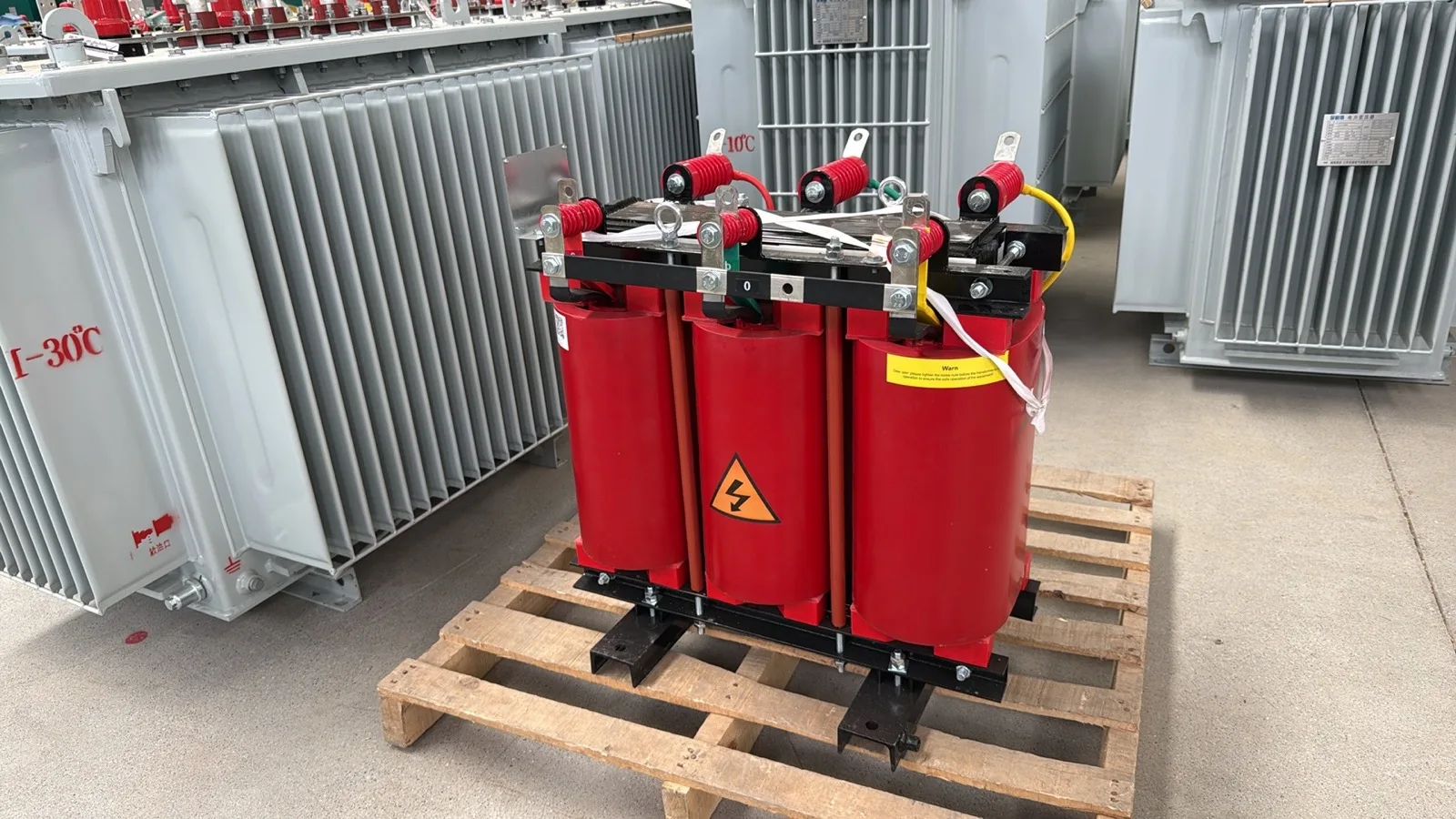
- Insulation — oil and paper (oil-immersed) or cast epoxy resin (dry-type).
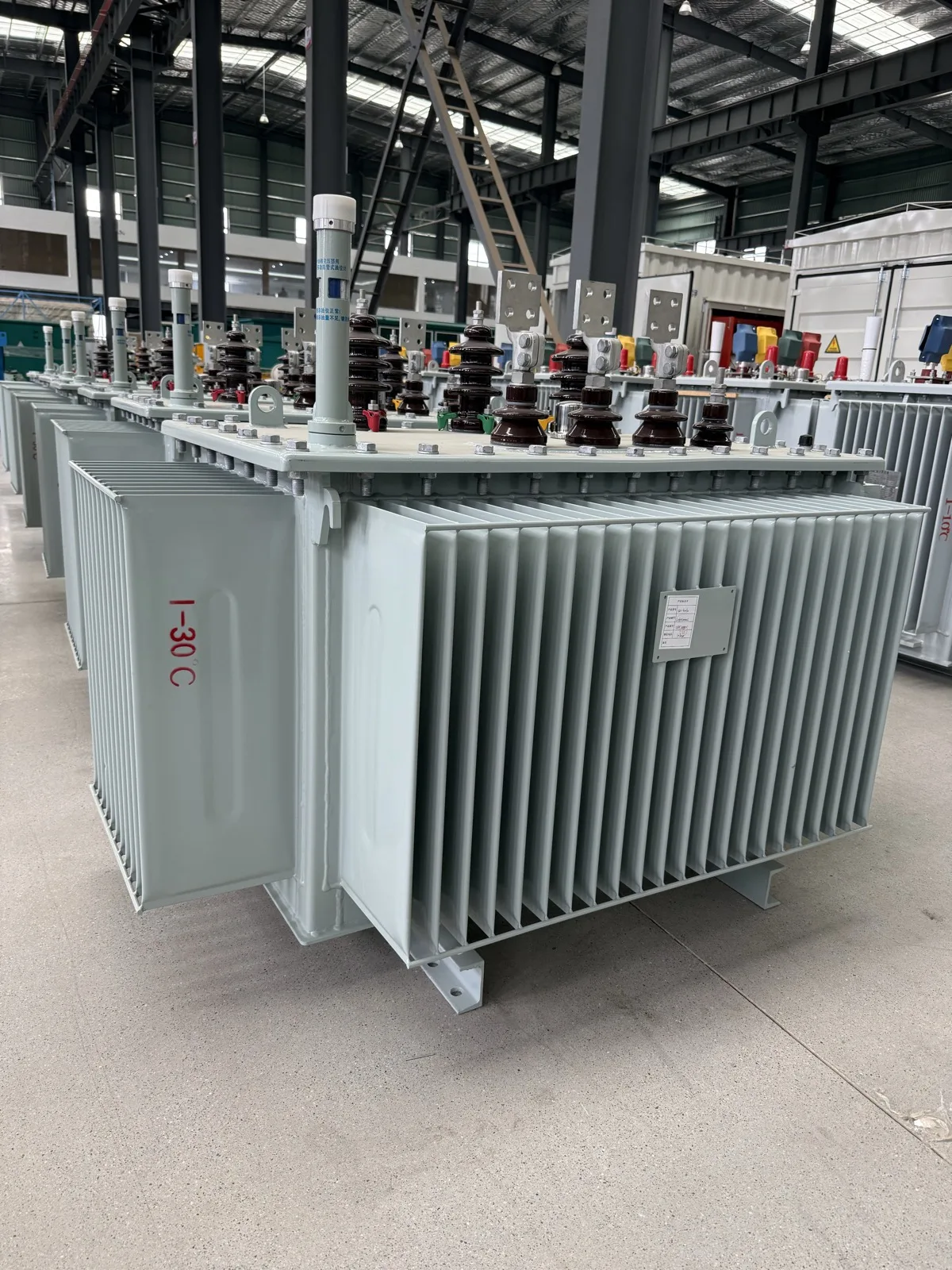
- Tank and radiators (oil-immersed) — contain the oil and dissipate heat by ONAN cooling.
- Bushings — insulated terminals where HV and LV conductors pass through the tank.
- Tap changer — adjusts the turns ratio (commonly ±2 × 2.5%) to regulate output voltage.
- Conservator and breather — accommodate oil expansion and keep moisture out.
- Protection — Buchholz relay, pressure-relief device and temperature indicators.
Understanding Transformer Nameplate Data
The nameplate is the transformer's identity card. The key fields to read:
- Rated power (kVA) — the continuous output capacity, e.g. 100, 250, 630, 1000 kVA.
- Rated voltages — HV / LV, e.g. 11000 / 433 V.
- Vector group — e.g. Dyn11, defining the winding connection and phase shift.
- Impedance voltage (% Z) — typically 4–6%, governing short-circuit current and parallel operation.
- Frequency — 50 or 60 Hz.
- Cooling class — e.g. ONAN for oil-immersed natural cooling.
- No-load and load losses — the energy lost in the core and windings.
- Insulation level (BIL) and temperature-rise class.
11 kV / 433 V Distribution Transformer Specifications
An 11 kV / 433 V transformer is the workhorse of secondary distribution. Typical specifications:
- Primary / secondary
- 11 kV (HV) → 433 V (LV) — 433 V no-load gives ~400 V on load
- Vector group
- Dyn11 — delta HV, star LV with neutral for single-phase loads
- Ratings
- Commonly 100 – 2500 kVA for distribution duty
- Impedance
- Typically 4 – 6% (Z%) per the rating and standard
- Cooling
- ONAN (oil-immersed) or AN (cast-resin dry-type)
- Standards
- IEC 60076 series (plus regional efficiency regulations)
Distribution Transformer Diagram Explained
A distribution transformer diagram shows the HV winding (delta) and LV winding (star) on a common core, with the neutral brought out from the star point. The single-line representation shows the HV terminals connected to the 11 kV network through the MV switchgear or RMU, and the LV terminals feeding the low-voltage main switchboard. The vector group symbol (Dyn11) summarizes the connection and the 30° phase shift between HV and LV.
Common Types of Distribution Transformers
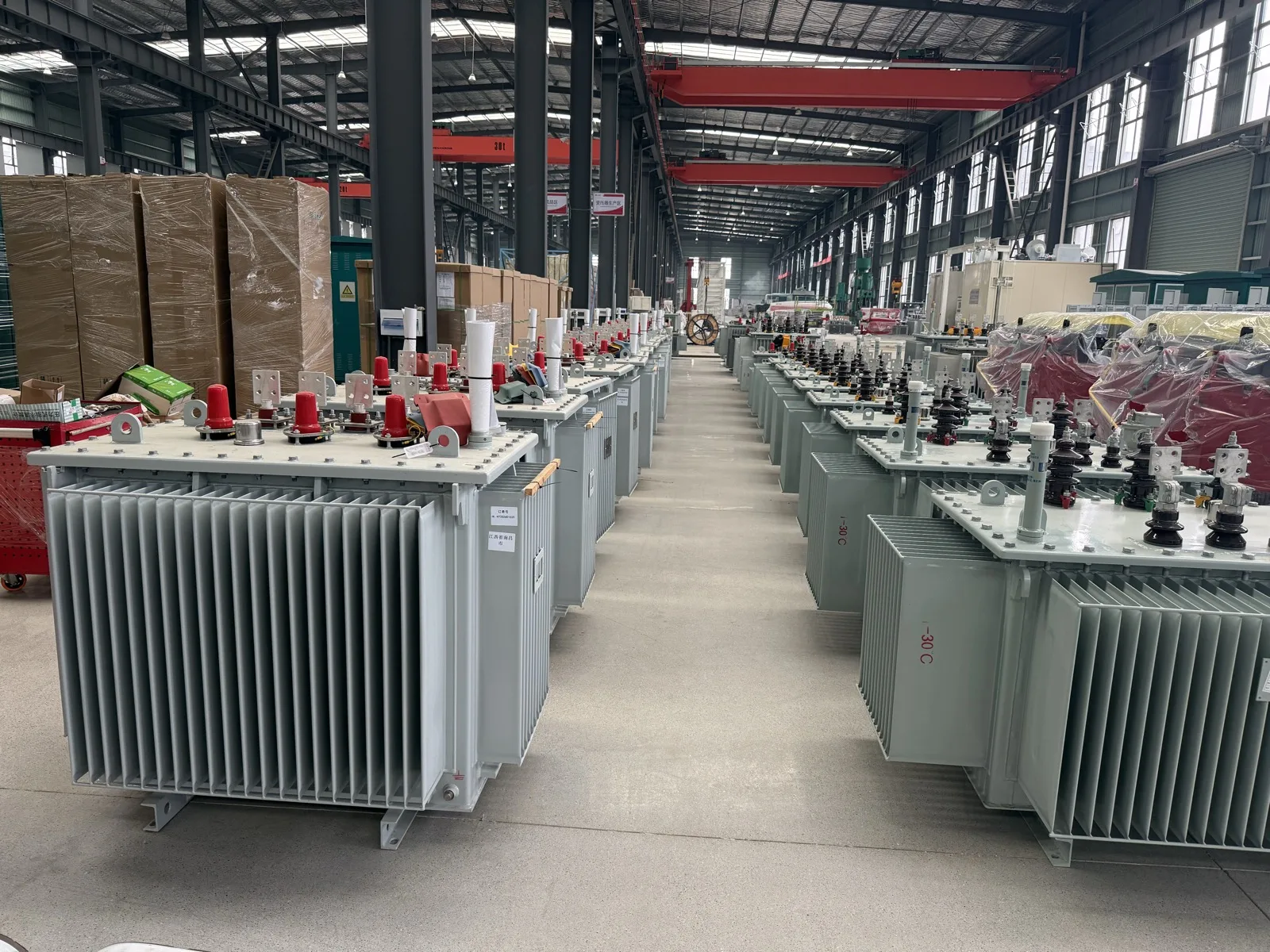
- Oil-immersed — core and windings in insulating oil; rugged and economical for outdoor and substation duty (e.g. HARRL S22 / S20 / S13).
- Cast-resin dry-type — epoxy-cast windings, oil-free and self-extinguishing, for indoor load-center installation (e.g. HARRL SCB series).
- Pole-mounted vs pad-mounted — small units on poles vs ground-mounted units for underground networks.
- Amorphous-core — low no-load loss for maximum all-day efficiency.
Selecting a Distribution Transformer Manufacturer
- Check standards compliance and type-test reports (IEC 60076) for every rating.
- Confirm manufacturing experience, quality system and export track record.
- Match the product range to your need — both oil-immersed and dry-type, across the kVA and voltage classes you use.
- Assess losses and efficiency against regional eco-design requirements over the unit's life.
- Evaluate lead time, after-sales support and the ability to integrate into prefabricated substations.
Maintenance and Safety Tips
- Test the oil periodically — dielectric strength, moisture, acidity and dissolved-gas analysis (oil-immersed).
- Keep radiators and bushings clean and check oil level and the breather desiccant.
- Monitor top-oil and winding temperatures and inspect for leaks.
- Verify protection devices (Buchholz, pressure relief, temperature indicators) on schedule.
- For dry-type units, keep ventilation clear and inspect windings for dust build-up.
Conclusion
Distribution transformers convert medium voltage to usable low voltage at the heart of every local network. Understanding the nameplate, the 11 kV / 433 V specifications, the vector group and the type makes specification and operation straightforward. HARRL manufactures distribution transformers in both oil-immersed (S22 / S20 / S13) and cast-resin dry-type (SCB) platforms to IEC 60076, and can supply them integrated into prefabricated substations. Send us your ratings and site conditions and our engineers will help you choose.